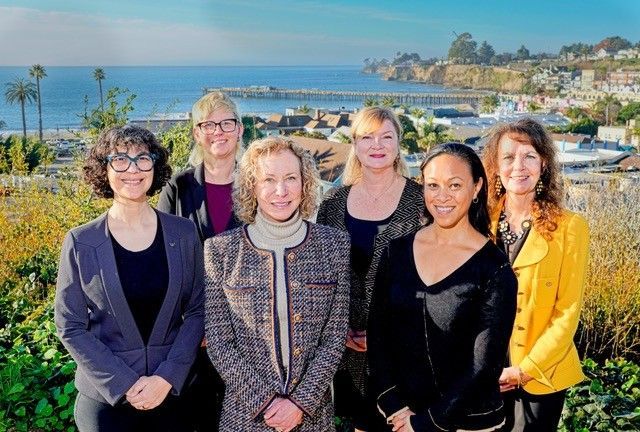
Planning and Trust Attorneys
Our estate planning attorneys will help you remain in the driver’s seat and ensure that your property and assets are divided up according to your wishes.

Planning and Trust Attorneys: Expert Guidance for Your Estate Needs
Proper estate planning, trust administration, and probate guidance are essential when securing your family's future. At Buchbinder Law Firm, we specialize in helping residents confidently navigate these complex legal matters. Whether you're creating an estate plan, managing a trust, or handling probate, our experienced attorneys provide personalized solutions tailored to your needs.
Estate Planning for Homeowners: A Comprehensive Guide to Protecting Your Most Valuable Asset in Santa Cruz
For many homeowners in Santa Cruz, Scotts Valley, and the Monterey Bay area, their domicile serves as the foundation on which to build their family’s value. Multiple factors contribute to the estimated property value of homes along California’s coastline being at or near their highest recorded levels. Due to the various characteristics of California real estate, most people discover that purchasing and owning a home in California presents many legal and tax challenges that, while they may be reasonably addressed through common, non-customized products, cannot be effectively addressed through traditional legal or tax planning.
At our office, we specialize in helping clients navigate the legal and tax complexities of California estate laws as they relate to residential real estate ownership. Without a well-designed estate plan, including a strategy for transferring your home to your heirs, your property may be subject to the public probate process, increased property taxes, and potentially higher taxable gains upon sale that could otherwise be avoided.
With the anticipated impact of Proposition 19 beginning in 2026, estate planning has become essential for California homeowners. Having the right strategies in place is a critical step in protecting your property, preserving family wealth, and safeguarding the values you intend to pass on.
Why a Will is Often Insufficient for California Homeowners
A common misconception among homeowners is that having a last will and testament is enough to protect their property. While a will is a foundational document, it has one major drawback when it comes to real estate: it does not avoid probate.
The Mandatory Probate Threshold
In California, if you own real estate valued at more than a relatively small threshold (currently set at $750,000 for real property or a total estate value over $208,850 in 2026), your estate must generally go through a court-supervised probate process. Because the median home price in Santa Cruz far exceeds these limits, almost every homeowner in our community is at risk of landing in probate court.
The Cost of Probate
Probate is notoriously expensive and time-consuming. The attorney fees and executor fees are set by California statute and are based on the gross value of the estate, not the equity you have in the home.
For instance, the probate fees are computed on the entire $1,500,000 value of a $1,500,000 home with a $500,000 mortgage. Tens of thousands of dollars may leave your inheritance as a result, leaving your heirs with nothing at all. Additionally, your family may find it difficult to manage the home or make mortgage payments throughout the twelve to eighteen months that a typical Santa Cruz County probate can take. Important lesson: Probate is costly and time-consuming, delaying the distribution of assets.
The Power of the Revocable Living Trust
For homeowners, the Revocable Living Trust is the most effective tool for avoiding the probate trap. A trust allows you to maintain full control over your property while you are alive, while providing a seamless transfer of that property to your beneficiaries upon your death, all without court intervention.
Key takeaway: A living trust avoids probate and ensures a smooth transfer of property.
Privacy and Efficiency
Unlike a will, which becomes a public record once filed with the court, a trust remains a private document. The specifics of your possessions and the identities of your heirs will not be visible to the public or your neighbors. More significantly, your successor trustee can take over the house practically instantly, ensuring that maintenance, insurance, and taxes are handled immediately.
The Importance of "Funding" Your Trust
Only when a trust truly "holds" your property can it be considered effective. The official transfer of the deed to their home from their own names to the trust's name is a crucial step that many homeowners overlook. We help our customers at the Law Offices of Emily Buchbinder prepare and register the deeds required to guarantee the full operation of their estate plan. A trust without a deed provides no protection for your house, much like a vault without any treasure.
Proposition 19: The New Reality of Property Tax Transfers
The adoption of Proposition 19 is arguably the biggest development for homeowners in California in recent years. When a home is transferred from a parent to a child, this statute significantly changed how property taxes are handled.
The End of the General Reassessment Exclusion
Prior to 2021, parents could leave their primary residence (and up to $1 million of other property) to their children without a property tax increase. Under Proposition 19, that is no longer the case.
The Current Rules for Inherited Homes
Today, an inherited home will only be exempt from a property tax reassessment if two conditions are met:
- The property was the parents' primary residence and became the child's primary residence within one year of the transfer.
- The market value of the home does not exceed the parent's "taxable value" plus an additional $1 million (which is adjusted slightly for inflation annually).
If your child does not move into the family home as their primary residence, the property will be reassessed to its current market value. In Santa Cruz, where a home purchased in the 1980s might have a taxable value of $200,000 but a market value of $2,000,000, this could result in a property tax bill jumping from $2,500 to $25,000 per year. We assist families in assessing potential tax effects and developing plans to address the financial strain. Important lesson: Be advised that a property tax reassessment may result in a significant rise in your heirs' expenses.
Capital Gains and the "Step-Up in Basis"
While property taxes are a concern, capital gains taxes can be even more impactful. One of the greatest advantages of passing a home through an estate plan rather than giving it away during your lifetime is the step-up in basis.
Lifetime Gifts vs. Inheritances
If you "add your child to the deed" while you are alive, you are making a gift of a portion of the home. The child receives your "original basis" (what you paid for the house). When the house is eventually sold, the child may owe massive capital gains taxes on the appreciation that occurred over decades.
However, if the child inherits the home after your death through a trust or will, their "basis" is "stepped up" to the fair market value on the date of your death. If they sell the home shortly after, they may pay little to no capital gains tax. A family can save hundreds of thousands of dollars with just one tax benefit. Important lesson: Because of the step-up in basis, inheritance offers a significant tax benefit.
Co-Ownership and Title Strategies
The way you hold title to your house during your lifetime has a significant impact on what happens when one of the owners dies. In California, the choice of title is crucial for married couples.
Joint Tenancy vs. Community Property
Many couples hold title as Joint Tenants. While this allows the property to pass to the survivor without probate, it only provides a "step up" in basis for half of the property.
We frequently advise holding title as Community Property with Right of Survivorship at the Law Offices of Emily Buchbinder. This title permits a double-step-up in basis following the death of the first spouse, but it offers the same probate avoidance as joint tenancy. As a result, the surviving spouse may be able to sell the house and possibly avoid paying capital gains tax on all appreciation since the purchase.
Planning for Incapacity: Protecting the Home While You are Alive
Estate planning for homeowners is not just about what happens after death. It is also about ensuring the home is managed if you become incapacitated due to illness or injury.
Durable Power of Attorney
Someone must have the legal authority to pay the mortgage, bargain with insurance companies, or even sell the house in order to cover your care if you are unable to manage your affairs. A Durable Power of Attorney chooses a trusted individual to handle certain financial problems. In the absence of this agreement, your family may have to go to court for a "conservatorship," which is costly, time-consuming, and public.
Advance Healthcare Directive
While not directly related to real estate, this document ensures your medical wishes are followed, preventing a financial drain on your home’s equity in the event of a medical crisis.
The Myth of the "Simple" Transfer on Death Deed
In recent years, California has allowed a document called a Transfer on Death (TOD) Deed. While this may seem like an easy way to avoid a trust, it comes with significant risks.
- Title Insurance Issues: Many title companies are hesitant to issue insurance on properties transferred via a TOD deed for several years after the owner’s death.
- Lack of Flexibility: A TOD deed does not allow for "back-up" plans. If your named beneficiary passes away before you, the home may still go through probate.
- Creditor Claims: Assets in a TOD deed can be more vulnerable to certain creditor claims than those held in a properly structured trust.
A revocable living trust is still the better, more secure choice for the majority of Santa Cruz area homeowners. If you are ready to safeguard your home and secure your legacy, contact the Law Offices of Emily Buchbinder now to book a consultation and begin your unique estate plan. Important lesson: Compared to wills or transfer-on-death deeds, trusts provide more security.
Multi-Generational Planning and Vacation Homes
There are numerous secondary or vacation homes owned by families living in Santa Cruz. Specialized planning would be necessary to also properly plan for these properties. If you own a ski cabin in the Sierra Nevada or a rental property in another state, you are likely at risk for “ancillary probate” in multiple jurisdictions. Using trusts can hold all your real estate under a single entity, helping avoid probate in every state where you own land.
We also assist families with "Legacy Planning" for family homes. If you want to ensure that a home stays in the family for generations, we can create specific trust provisions that address how expenses are shared, who has the right to live in the home, and how a sibling can be "bought out" if they want to move on.
Key takeaway: Thoughtful planning can preserve family homes for future generations.
Why Choose Emily Buchbinder for Your Homeowner Estate Plan?
Estate planning for real estate requires a lawyer who understands the intersection of property, tax, and probate law. Emily Buchbinder brings a high level of technical expertise and a deep knowledge of the local Santa Cruz market to every case.
Personalized and Local
We don't offer "cookie-cutter" plans. We meet with you to learn about your family's dynamics, your financial objectives, and your particular property-related worries. We are aware of the sentimental ties families have to their homes and the value of Santa Cruz real estate.
Comprehensive Service
We don't simply give you a pile of documents and let you go. We help you retitle your house and ensure your plan is carried out to the letter. Our aim is to provide you with the assurance that your family and your house are safe.
Transparent and Approachable
Legal matters can be intimidating. We pride ourselves on being clear, transparent about our fees, and easy to talk to. We want you to feel confident in your plan and comfortable asking questions.
Don't Leave Your Home's Future to Chance
Your home is likely your greatest legacy. In the complex legal environment of 2026 California, leaving your real estate to be handled by the state's default rules is a high-risk strategy. By creating a comprehensive estate plan now, you can avoid the high costs of probate, minimize property tax increases for your children, and ensure a smooth transition of your assets.
Whether you are a first-time homeowner or you have owned your Santa Cruz property for decades, the Law Offices of Emily Buchbinder are here to help you build a secure future.
Contact the Law Office of Emily J. Buchbinder team at (831) 462-1313 or fill out our confidential contact form.