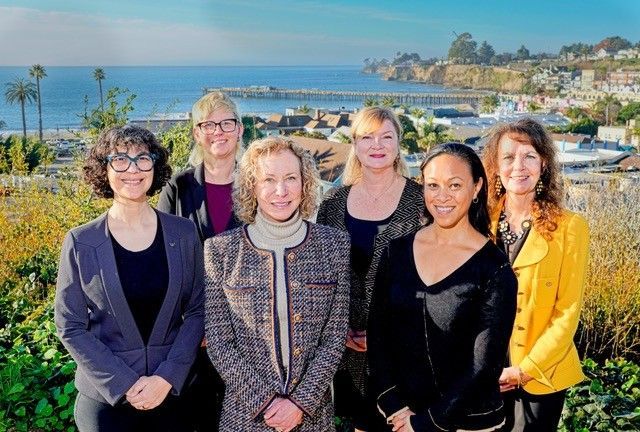
Planning and Trust Attorneys
Our estate planning attorneys will help you remain in the driver’s seat and ensure that your property and assets are divided up according to your wishes.

Planning and Trust Attorneys: Expert Guidance for Your Estate Needs
Proper estate planning, trust administration, and probate guidance are essential when securing your family's future. At Buchbinder Law Firm, we specialize in helping residents confidently navigate these complex legal matters. Whether you're creating an estate plan, managing a trust, or handling probate, our experienced attorneys provide personalized solutions tailored to your needs.
What Happens if I Don’t Have an Estate Plan? Allowing the State to Decide Your Destiny
The subject of estate planning is often viewed as a task to be postponed, something reserved for the future or for the wealthy. In reality, it is one of the most immediate and critical acts of responsibility you can undertake for yourself and your loved ones. In Santa Cruz County, a region where property values are consistently high and family life is cherished, the consequences of not having an estate plan can be financially devastating and emotionally painful.
If you pass away or become incapacitated without a comprehensive set of legal directives in place, you do not simply avoid legal processes; instead, you surrender all control. You appoint the state of California, through its rigid statutes and court systems, to dictate the terms of your life’s legacy. The law, not you, will decide who raises your children, who controls your finances, and who ultimately inherits your home and assets.
At the Law Office of Emily J. Buchbinder, we specialize in providing the legal infrastructure necessary to prevent this outcome. Our goal is to empower you to secure your family's future, ensuring that your intentions, your relationships, and your values are honored. We offer specialized expertise, led by Emily J. Buchbinder, a Certified Legal Specialist in Estate Planning, Trust & Probate Law, who will guide you through the process of taking control today.
What an Estate Plan Is, and Why Its Absence Matters
An estate plan is a tailored collection of legally binding documents designed to manage your affairs. At the same time, you are alive and distribute your assets after your death. A truly comprehensive plan includes more than just a document for asset transfer; it is a life-planning document.
A proper plan typically includes:
- A Revocable Living Trust: The primary tool for managing assets during life and distributing them after death without court intervention (probate).
- A last will: A secondary document used to nominate a guardian for minor children and direct any forgotten assets into the Trust.
- A Durable Power of Attorney for Finance (DPOA): Appoints a trusted agent to manage your financial and business affairs if you become mentally or physically incapacitated.
- An Advance Health Care Directive (AHCD): Names a medical agent to make health care decisions for you and outlines your end-of-life wishes.
When you fail to create these documents, the result is not simplicity; it is legal default. The court system steps in to fill the vacuum, replacing your personal, nuanced decisions with standardized, inflexible procedures. This is the moment your family loses control to the state's rigid hand.
The Legal Default: When the Court Takes Over Your Legacy
When a person dies without a Will or Trust, they are said to have died intestate. California has an entire body of law, called the Laws of Intestate Succession (found in the Probate Code), designed to handle this exact situation. These laws, while intended to be fair, apply an impersonal formula to your life’s work, one that ignores deep friendships, cohabitation with an unmarried partner, and the specific needs of your family members.
1. The Financial Crisis: The Probate Process
For most Santa Cruz residents who own real estate or have accumulated modest wealth, dying intestate guarantees that your entire estate must go through formal probate.
- The Freeze: The moment you pass away, your assets, your home, your bank accounts, your investment portfolios, are effectively frozen. Your surviving family cannot access them, sell property, or manage debts without a court order. This can lead to a financial crisis for a surviving spouse or dependents who rely on those assets for daily living expenses.
- The Cost: California probate is notoriously expensive. The law sets statutory fees for both the court-appointed Administrator (the person who manages your estate) and their attorney. These fees are based on the estate's gross value, not its net equity. For an estate with a high-value home, these fees can easily amount to tens of thousands of dollars, all paid directly from your estate before your heirs see a single cent.
- The Delay: Even a simple intestate probate case can take 12 to 18 months to resolve, and often longer if the estate is complex or if family members dispute the court-mandated division. During this extended period, your assets are tied up in the public court system.
- The Public Nature: Because probate is a court process, all documents, including the detailed inventory of your assets, your debts, and the names of your surviving relatives, become a matter of public record. Your family loses all financial privacy.
2. The Unwanted Division: Intestate Succession
Under California's intestate laws, the court divides your separate property (assets you owned before marriage, or received as a gift or inheritance) according to a strict hierarchy that often creates unintended and painful results.
- For Married Individuals: While a spouse automatically inherits all of the community property (assets acquired during the marriage), your separate property is divided. If there is only one child, that child will inherit 50% of the deceased parent's estate, with the other half going to the surviving spouse. If there is more than one child, the children will inherit 66% of the deceased parent's estate, with the remaining 33% going to the surviving spouse. The result is that the surviving spouse must share ownership of the deceased parent's estate with the deceased parent's children and may encounter difficulties managing that property, as well as potentially face additional taxation.
- For Unmarried Individuals: If you are unmarried, your assets go entirely to your children, then to your parents, then to your siblings, and so on down the family bloodline. This means your long-term, committed unmarried partner, or your most cherished friends, will receive nothing, regardless of the promises made or how intertwined your lives were. Stepchildren who were not legally adopted also inherit nothing.
- Heirlooms and Sentiment: The law makes no provisions for sentimental value. That treasured family heirloom you wanted to pass to a specific godchild, or the donation you intended to make to a local Santa Cruz charity, must be sold. The proceeds are distributed according to the cold logic of the intestacy formula.
3. The Family Trauma: Guardianship for Minor Children
Perhaps the most terrifying consequence of failing to plan is losing control over who raises your minor children. If you and the child’s other parent are both deceased or incapacitated without a Will that nominates a guardian, the decision falls entirely to the Probate Court.
- The Court’s Decision: Family members, friends, or even the state may petition the court to be appointed as your children's guardian. The judge must then follow a lengthy, formal process, appointing a Court Investigator to assess the candidates' suitability, interview the children, and submit a report.
- Loss of Input: While the court will consider the child's "best interest," your voice, your choice of who shares your values, your parenting style, and who has the best relationship with your children, is entirely missing. The court may appoint a relative you would have strongly objected to, perhaps due to distance, age, or lifestyle.
- Asset Management: Furthermore, if your children inherit assets, the court must appoint a Guardian of the Estate to manage that money until the child turns 18. This may be the same person appointed as guardian of the person, or it may be someone else entirely. Regardless, the child receives complete, unrestricted control of the money immediately upon turning 18, a financial disaster most parents seek to prevent.
4. The Loss of Personal Autonomy: Incapacity
Estate planning is not just about death; it’s about life. If you become incapacitated due to a stroke, accident, or illness without a Durable Power of Attorney or an Advance Health Care Directive, your family faces a legal struggle to care for you.
- Financial Conservatorship: Without a DPOA, your loved ones must petition the court to appoint a Conservator to manage your finances and pay your bills. This process is expensive, involves multiple court hearings, requires the conservator to report to the court annually, and can result in years of expense and delay before you gain access to your own funds.
- Medical Conservatorship: Your closest family members may not have the legal authority to make critical medical decisions or even access your medical records due to HIPAA laws. This forces them into a stressful, time-sensitive medical dilemma, potentially delaying life-saving care. At the same time, the court works to appoint a medical agent.
Plan Today: The Act of Love and Responsibility
The harsh realities of dying intestate in California serve as a powerful motivation to act. Estate planning is the single most effective way to replace uncertainty and statutory mandates with clarity and control. It is the ultimate act of love for your family, providing them with a clear, stress-free path forward during their time of grief.
We understand that taking this first step can be daunting. The legal terminology and the subject matter can be overwhelming.
At the Law Office of Emily J. Buchbinder, we are dedicated to simplifying this complex landscape. We want to prevent anything you do not want to happen from even being a possibility.
- Specialized Expertise: Our firm is led by Emily J. Buchbinder, a Certified Legal Specialist in Estate Planning, Trust & Probate Law. This is the highest level of proven competency recognized by the State Bar of California in this field. Furthermore, her Master of Laws in Taxation (LL.M.) ensures that your plan is not only legally sound but also strategically designed to minimize taxes for the next generation.
- Personalized Service: We're not a company that focuses on gaining high volumes of clients. Instead, we leverage a thorough understanding of your specific financial goals and unique family dynamics to create a customized strategic plan tailored to you. We ensure you have a complete understanding of all aspects of the custom plan, free of legal terminology. Each part is explained in simple language to help you better understand how everything works together to arrive at your goals.
- A Stress-Free Path: We walk you through the entire process, including the essential final step of funding your Trust (retitling your assets), where many DIY plans fail. Our comprehensive approach ensures that when your family needs the plan, it is effective and ready to work immediately, avoiding the courthouse entirely.
Don't let the state of California write your life's final chapter. Don't leave your family facing the costs, delays, and emotional anguish of probate, guardianship hearings, and unwanted asset division.
Take control of your destiny and secure your family’s future today. Contact the Law Office of Emily J. Buchbinder to schedule a confidential consultation and get started on a plan that protects everything and everyone you love.
Contact the Law Office of Emily J. Buchbinder team at (831) 462-1313 or fill out our confidential contact form.