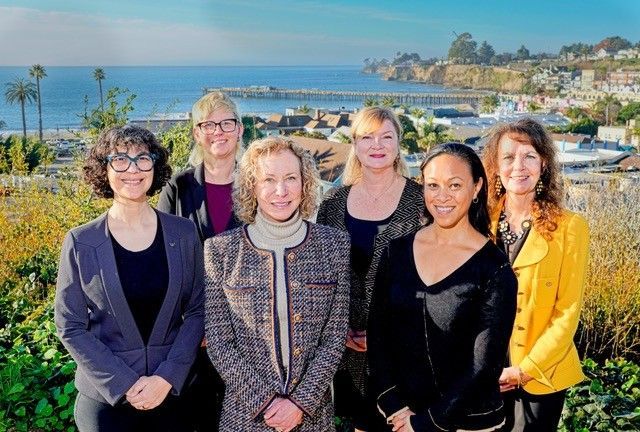
Santa Cruz Planning and Trust Attorneys
Our Santa Cruz estate planning attorneys will help you remain in the driver’s seat and ensure that your property and assets are divided up according to your wishes.
Protect What Matters Most
Estate planning, trust administration, and probate can be complex legal processes that require careful attention to detail. At Buchbinder Law Firm, our experienced Santa Cruz planning and trust attorneys help individuals and families navigate these critical matters with
personalized and thoughtful legal guidance. Whether creating an estate plan, managing a trust, or dealing with probate, our firm provides the expertise and compassionate support you need to protect what matters most—your family, your assets, your peace of mind.
What Happens If You Die Without a Will? Understanding Intestate Succession in Santa Cruz
Facing mortality is difficult, but essential. For Santa Cruz homeowners, estate planning frequently lags. Many believe that their spouse or children will automatically inherit their riches. But if you don't have a legal will, you pass away "intestate."
You no longer have control over who handles your affairs, who takes care of your children, or who obtains your possessions. After that, California uses intestate succession to make the decision. We witness the confusion and stress this puts on families at the Law Offices of Emily Buchbinder. You can take control of your legacy in 2026 by staying informed about these laws.
The Default Plan: What Is Intestate Succession?
According to the California Probate Code, intestate succession is the legal procedure for allocating an estate in the absence of a will. It is inflexible and rigorously adheres to blood or legal ties, disregarding the nature of relationships, verbal commitments, or altruistic intentions.
California distributes your estate based on marital status and whether the property is community or separate. As a community property state, the difference between assets acquired or brought into the marriage is key.
Who Inherits? The California Hierarchy of Heirs
When someone dies intestate in Santa Cruz, the court follows a specific order of priority to determine the heirs at law. Although the outcomes are frequently unexpected, this procedure guarantees that assets remain within the family.
Surviving Spouses and Domestic Partners
Your spouse is the primary beneficiary if you are married or in a registered domestic partnership at the time of your passing. They might not inherit everything, though.
- Community Property: If you are married to your spouse or in a registered California domestic partnership at your time of death, your spouse will be entitled to your community property as your primary beneficiary (including most of your property and income, and real property acquired or received during marriage).
- Separate Property: Your spouse will be entitled to inherit (and share) your separate property with your children, parents, or siblings if you were the only owner of your property prior to marriage or if you receive a gift or inheritance that is not in both names or that is a separate inheritance.
Children and Grandchildren
If you die without a spouse and have kids, they will receive all of your assets equally. If one of your kids passes away before you do and has kids of their own (your grandchildren), they typically will split what would have gone to their parent. This is referred to as distributing per stirpes or the right of representation.
It's important to understand that California law only recognizes biological and legally adopted children for inheritance purposes. Stepchildren and foster children do not automatically receive inheritance rights under intestate succession unless they were legally adopted or have previously established a very specific scenario of "equitable adoption," which is difficult and expensive to litigate through the court.
Parents and Siblings
If you are unmarried and have no children, the law looks to your parents. They divide the estate equally if both parents are still alive. Your siblings split the estate if your parents have already died. This includes half-siblings, who, according to California law, receive the same treatment as full siblings.
The court will look for more distant relatives, such as grandparents, aunts, uncles, and cousins, if you have neither parents nor siblings.
The Probate Process in Santa Cruz Without a Will
When there is no will, your estate must still go through the probate court if the value of your assets exceeds certain thresholds. In 2026, the California small estate limit for non-real estate assets will be adjusted to $208,850. If your estate is worth more than this, or if you own real property (land or a home) valued over $750,000, a formal probate is usually required.
Appointing an Administrator
Because there is no will to name an "executor," the court must appoint an "administrator" to manage the estate. California law provides a priority list for who can serve in this role, starting with the surviving spouse or domestic partner, then children, then grandchildren, and finally parents.
Being an administrator is a significant burden. Without the specific powers usually granted in a will (such as the power to sell real estate without court supervision), the administrator must seek the judge's permission for almost every major action. This adds layers of bureaucracy and delay to an already difficult time.
The Financial Cost of Dying Intestate
In California, probate is infamously costly. The administrator's and lawyer's fees are prescribed by law, which means they are determined as a percentage of the estate's gross value and cannot be negotiated.
The statutory fees for an average $1,000,000 Santa Cruz residence are as follows:
- 4 percent of the first $100,000
- 3 percent of the next $100,000
- 2 percent of the next $800,000
For example, the attorney in this instance would be able to bill $23k, plus an additional $23k as an administrator, for a combined total of $46,000 in required fees. That doesn't include court filings, appraisals, or probate bonds. In an estate that has a will or trust, you can typically waive the requirement of a probate bond and reduce these expenses; however, when settling a deceased person's estate without a will, you typically have no option to waive the bond or associated costs.
The Hidden Risks of Dying Without a Will
The emotional and practical risks of intestacy can be even more damaging than the financial burden.
Guardianship of Minor Children
This is perhaps the most critical reason to have a will. If you have children under the age of 18 and both parents pass away, a will is the only place where you can legally nominate a guardian.
Without a will, the court will decide who raises your children. While the judge will attempt to choose what is in the "best interest of the child," they may not choose the person you would have wanted. This can lead to bitter custody battles between well-meaning relatives, all while your children are mourning the loss of their parents.
Loss of Privacy
Probate is a public process. When you die without a will, the entire inventory of your assets, your debts, and the identities of your heirs become a matter of public record. Anyone can go to the Santa Cruz County Superior Court and see exactly what you owned and who is getting it. This can expose your beneficiaries to predatory solicitors or cause family friction when the exact value of an inheritance is made public. In summary, dying without a will means your family’s financial details lose privacy.
The Problem of Modern Families
The law of intestate succession was designed for the traditional nuclear family of the mid 20th century. It does not reflect the reality of many Santa Cruz residents in 2026.
- Unmarried Partners: No matter how long you have lived together or how much you share your lives, an unmarried partner has zero right to inherit under intestate succession. Without a will or a trust, your partner could be forced out of the home you shared.
- Blended Families: A surviving spouse receives only a portion of your separate property if you had children from a previous relationship; this may require a home sale to cover the children's shares.
- Estranged Relatives: Your entire inheritance may pass to a parent or sibling you haven't spoken to in decades, rather than a close friend or long-term partner.
Assets That Bypass Probate (With or Without a Will)
There is a widespread misperception that all assets must go through probate. Whether or not you have a will, some types of property transfer straight to beneficiaries. Among them are:
- Assets in a Living Trust: Trust assets are administered by the successor trustee without court involvement.
- Joint Tenancy Property: When you and someone own real estate as "joint tenants with rights of survivorship," whatever you have upon the other person's death automatically transfers to the survivor.
- Beneficiary Designations: Life insurance policies, 401(k) accounts, and Individual Retirement Accounts pass to named beneficiaries.
- Payable-on-Death (POD) Accounts: When a beneficiary is designated on a bank account, the account transfers outside of probate court.
However, if you fail to update these designations or if your named beneficiary dies before you do, these assets may "default" back into your estate and become subject to the rules of intestate succession. The core point: regularly updating beneficiary designations prevents your wishes from being overridden by default laws.
Why You Need a Santa Cruz Estate Planning Attorney
Without a will, handling the aftermath of a death is a difficult and risky task. Our specialty at the Law Offices of Emily Buchbinder is assisting families with the probate process and, more significantly, helping people avoid it by making advance plans.
Expert Guidance Through Probate
If a loved one has already passed away without a will, we provide the steady hand you need. We help administrators understand their fiduciary duties, comply with court requirements, and ensure assets are distributed correctly in accordance with the law. We strive to make the probate process as efficient and stress-free as possible for Santa Cruz families.
Customized Estate Planning
The best way to protect your family is to ensure that you never fall into the trap of intestate succession. Emily Buchbinder works with clients to create comprehensive estate plans that include:
- Wills: To name guardians for children and direct the distribution of personal property.
- Living Trusts: To avoid the time and expense of probate altogether.
- Powers of Attorney: To ensure someone you trust can make financial and medical decisions if you become incapacitated.
The takeaway: proactive planning gives you, not the state, control over your legacy.
A Local Perspective
As a firm in Santa Cruz, we have knowledge of the local real estate market and the specific needs of our community. At Cornerstone, we give you the same level of attention that you can receive from a larger firm. When you reach out to us, your case will not be treated as a case number; rather, you will be treated as a neighbor who deserves peace of mind with a well-thought-out plan.
Taking Control of Your Legacy
Dying without a will means leaving your family's future to a strict legal formula, which results in higher costs, longer delays, and no ability for you to be in control of your legacy. The state's distribution plan is better than nothing; however, it is not what most people would choose for their family.
Whether you need help settling an intestate estate or you are ready to create a plan that reflects your true wishes, the Law Offices of Emily Buchbinder are here to help. Don't leave your legacy to chance.
Contact the Law Office of Emily J. Buchbinder team at (831) 462-1313 or fill out our confidential contact form.